IBS Symptoms: Understanding Gas, Bloating & Gut Discomfort

If your stomach has a mind of its own — bloated after meals one day, loose motions the next, cramps that ease only after you go to the toilet — you're not imagining it, and you're far from alone. This pattern often points to Irritable Bowel Syndrome (IBS), one of the most common gut conditions worldwide.
IBS is uncomfortable and frustrating, but it is not a dangerous disease and it doesn't damage the bowel. Understanding your symptoms is the first step to managing them calmly. This guide explains what IBS feels like, what tends to trigger it, and how diet, lifestyle and Ayurvedic wellness habits can help you feel more in control.
Key Takeaways
- IBS is a functional gut disorder — the bowel looks normal but doesn't work smoothly. It causes real discomfort but does not cause cancer or permanent damage.
- Core symptoms: abdominal pain or cramping linked to bowel movements, bloating, excess gas, and a change in stool pattern (constipation, diarrhoea, or both).
- Common triggers: certain foods, irregular meals, stress and poor sleep — gut and mind are closely linked.
- Management is about patterns: regular meals, identifying trigger foods, hydration, movement and stress control usually help more than any single remedy.
- Red-flag symptoms (blood in stool, unexplained weight loss, symptoms starting after 50) always need a doctor — they are not typical of IBS.
What IBS actually is
IBS is called a "functional" disorder because the gut is structurally normal — scans and tests come back clear — but the way the bowel muscles contract and the way gut nerves signal is oversensitive. Food may move too fast (leading to loose motions) or too slow (leading to constipation and bloating), and normal gut sensations can feel painful.
Because there's no visible damage, IBS is diagnosed mainly from the pattern of symptoms over time, once a doctor has ruled out other causes.
The common symptoms to recognise
IBS typically involves several of these together:
- Abdominal pain or cramping, often in the lower belly, that eases after passing stool.
- Bloating and a visibly distended stomach, usually worse as the day goes on.
- Excess gas (gas ki problem) and rumbling.
- Changed bowel habits — some lean towards constipation (IBS-C), some towards diarrhoea (IBS-D), and many swing between both (IBS-M).
- A feeling of incomplete evacuation — that you haven't fully finished.
- Mucus in the stool.
Symptoms often flare in bouts and settle for a while, and many people notice they're worse during stressful periods.
What tends to trigger a flare
Triggers are individual, but the usual suspects are:
- Foods: very oily or fried food, excess chai/coffee, heavy dairy for some, beans and certain gas-forming vegetables, and highly processed or spicy meals.
- Irregular eating: skipping meals, eating very late, or long gaps followed by a large heavy meal.
- Stress and emotions: the gut and brain are wired together (the "gut-brain axis"), so anxiety and tension genuinely change bowel behaviour.
- Poor sleep and lack of physical activity.
Keeping a simple food-and-symptom diary for two to three weeks is the single most useful thing you can do — it turns guesswork into a clear list of your triggers.
The Ayurvedic perspective on gut comfort
Ayurveda sees healthy digestion as the foundation of overall wellness, governed by agni (digestive fire). IBS-like symptoms are often understood as disturbed agni and aggravated vata, which is why irregular routines, cold or dry foods, and stress make things worse.
The traditional emphasis is on a calm, regular routine: eating warm, freshly cooked, easily digestible meals at consistent times, not overeating, and giving the mind rest. Gentle carminative spices such as jeera (cumin), saunf (fennel), ajwain (carom) and hing (asafoetida) are traditionally used in Indian kitchens to ease gas and support comfortable digestion. Herbs like Triphala and Amla are traditionally used to support gentle, regular bowel function as part of a healthy routine — as supportive wellness habits, not as a cure for IBS.
Practical steps that usually help
- Eat at regular times and avoid very long gaps; smaller, calmer meals beat one big heavy one.
- Slow down while eating — chew properly, don't eat on the run.
- Stay hydrated with warm water through the day, especially if constipation is the main issue.
- Add gentle fibre gradually (soaked, cooked forms suit many people better than raw), and increase it slowly to avoid more gas.
- Move daily — even a 20–30 minute walk helps the bowel find its rhythm.
- Manage stress with sleep, breathing or light yoga; because of the gut-brain link, calming the mind often calms the gut.
- Test one trigger at a time using your food diary, rather than cutting out many foods at once.
When to see a doctor
IBS itself is not dangerous, but some symptoms are not part of IBS and need prompt medical review. See a doctor if you have blood in your stool, unexplained weight loss, persistent severe pain, fever, anaemia, symptoms that wake you at night, or new bowel changes that begin after age 50, or a family history of bowel disease.
A doctor can confirm whether it's IBS or something else, and rule out conditions that need different treatment. Getting checked brings peace of mind — worry itself can worsen gut symptoms.
How Calm IBS Support fits
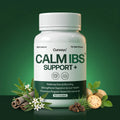
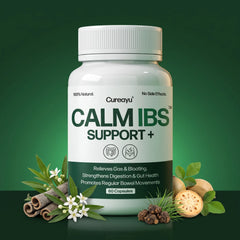
Calm IBS Support is our Ayurvedic supplement formulated with traditionally used gut-soothing herbs, designed to support digestive balance and everyday intestinal comfort as part of a calm routine and sensible diet. It is not a cure for IBS and is meant to complement — not replace — medical advice, especially if your symptoms are new, severe or changing. If you're already under a doctor's care, check before adding any supplement. Learn more about Calm IBS Support →
FAQ
What are the main symptoms of IBS?
The core symptoms are abdominal pain or cramps that ease after passing stool, bloating, excess gas, and a change in bowel habit — constipation, diarrhoea, or alternating between them. Many people also feel they haven't fully emptied.
Is IBS a serious or dangerous condition?
IBS is uncomfortable but not dangerous — it doesn't damage the bowel or lead to cancer. However, symptoms like blood in the stool or weight loss are not part of IBS and should be checked by a doctor.
What foods should I avoid with IBS?
Common triggers include very oily or fried food, excess caffeine, heavy dairy, gas-forming beans and vegetables, and spicy or highly processed meals. Triggers vary by person, so a food-and-symptom diary is the best way to find yours.
Can stress cause IBS symptoms?
Yes. The gut and brain are closely connected, so stress, anxiety and poor sleep can genuinely trigger or worsen IBS flares. Managing stress often improves gut symptoms.
Does Ayurveda help with IBS?
Ayurveda focuses on strengthening digestion (agni) through regular routines, warm easily digestible meals and carminative spices like cumin and fennel. These are supportive wellness habits for comfortable digestion, not a cure — persistent symptoms still need medical guidance.
Written & medically reviewed by Dr. Istuti, BAMS — in-house Ayurvedic physician at Cureayu. Medically reviewed on 12 August 2026.
Disclaimer: This content is for educational purposes and is not a substitute for professional medical advice. Consult a qualified physician before starting any supplement, especially if you have persistent digestive symptoms or take medication.
Sources:
- NIDDK — Irritable Bowel Syndrome (IBS): niddk.nih.gov
- MedlinePlus — Irritable Bowel Syndrome: medlineplus.gov
- Ministry of AYUSH — Ayurveda & healthy digestion (Agni): ayush.gov.in
Disclaimer: Educational content, not a substitute for professional medical advice. Consult a qualified physician before starting any supplement.